When Are Seized Drugs “HAZMAT”? A Guide for Evidence Technicians
Seized drugs may be controlled substances, but that does not automatically make them DOT hazardous materials (HAZMAT). This guide helps evidence technicians understand the difference between DEA, DOT, EPA, and OSHA rules, and when hazmat classification becomes relevant.
Dr. Kyle C. Murphy
6/26/20266 min read
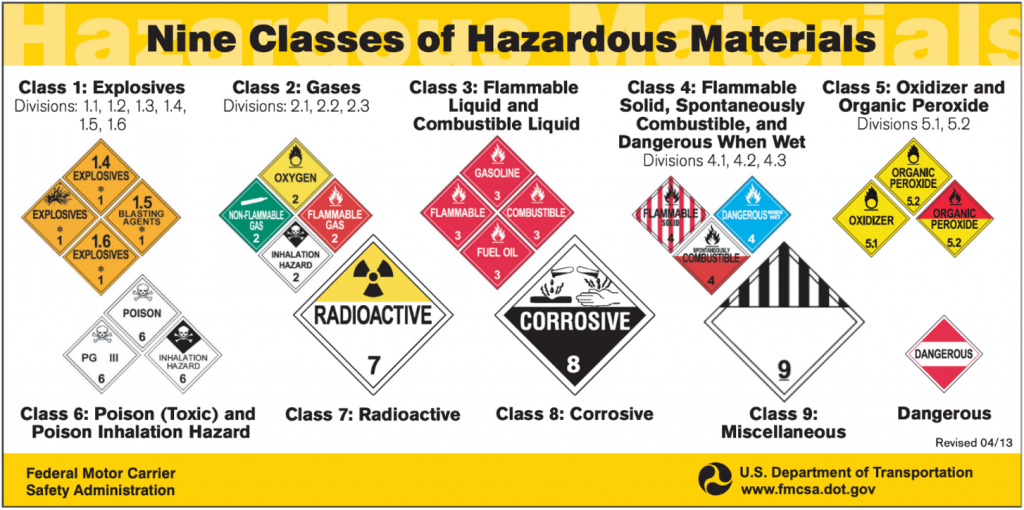
Contraband drugs seized as evidence, whether Schedule I, II, III, IV, or V controlled substances, are not automatically “hazardous materials” merely because they are illegal, dangerous, toxic in ordinary speech, or controlled by the DEA. Under federal law, “controlled substance” status and “hazardous material” status are separate regulatory classifications, created for different purposes by different agencies.
A substance is a DEA-controlled substance because it is listed under the Controlled Substances Act and DEA regulations. A substance is a DOT hazardous material only if the U.S. Department of Transportation has determined that it presents an unreasonable risk when transported in commerce and has designated it as hazardous under the federal hazardous materials transportation law.
For property and evidence rooms, the practical rule is this: DEA scheduling controls custody, security, documentation, diversion prevention, and destruction. DOT hazardous-material rules generally become relevant when the material is being offered for or transported in regulated transportation, not simply because it is stored as evidence.
“Controlled Substance” Is Not the Same Legal Category as “Hazardous Material”
The DEA schedules regulate drugs and substances based on abuse potential, accepted medical use, and dependence risk. DEA regulations list controlled substances in 21 CFR Part 1308, including Schedules I through V. (eCFR) Those rules answer questions such as: Is this substance controlled? What schedule is it in? Who may possess, prescribe, dispense, transfer, or destroy it?
By contrast, DOT hazardous-material regulations are transportation-safety rules. The operative federal definition is in 49 CFR § 171.8, which defines a “hazardous material” as a substance or material that DOT has determined is capable of posing an unreasonable risk to health, safety, and property when transported in commerce and has designated as hazardous under 49 U.S.C. § 5103. (eCFR)
The phrase “when transported in commerce” sets the legal and regulatory guiderails. It means DOT hazardous-material classification is not a general-purpose label for every dangerous item in a police evidence vault. It is a transportation classification.
The Hazardous Materials Table Is a Transportation Table, Not an Evidence-Room Inventory Rule
The DOT Hazardous Materials Table in 49 CFR § 172.101 designates materials as hazardous materials “for the purpose of transportation” and identifies their hazard class, proper shipping name, identification number, packing group, labels, and related transportation requirements. (eCFR)
That matters for evidence technicians because the table is not triggered by the mere fact that a substance is contraband or is sitting in a sealed evidence package. It is triggered when the substance is being classified, packaged, marked, labeled, documented, offered, or moved in transportation subject to the DOT Hazardous Materials Regulations.
Some drugs or drug-related materials may qualify as hazardous materials during transportation because of their chemical properties, concentration, quantity, form, packaging, contamination, or classification as toxic, flammable, corrosive, infectious, or otherwise regulated. But that analysis is not the same as asking whether the item is DEA Schedule I, II, III, IV, or V.
DEA Scheduling Does Not Create DOT HAZMAT Status
A common evidence-room mistake is to reason as follows: “This is fentanyl, methamphetamine, cocaine, heroin, or another controlled substance; therefore, it must be hazardous material.” This conclusion skips a necessary regulatory step.
DEA scheduling under 21 CFR Part 1308 makes the item a controlled substance. (eCFR) It does not, by itself, place the item into a DOT hazard class. DOT classification depends on the Hazardous Materials Regulations in 49 CFR Parts 171–180, including the definition in 49 CFR § 171.8 and the Hazardous Materials Table in 49 CFR § 172.101. (eCFR)
Put differently: DEA status answers “may we possess and how must we secure and dispose of it?” DOT HAZMAT status answers “how must it be classified and handled for regulated transportation?” Those are related operational concerns, but they are not the same legal question.
Storage in an Evidence Room is Governed Primarily by Evidence, Controlled-Substance, Safety, and Waste Rules—Not DOT HAZMAT Rules
When a law enforcement agency holds contraband controlled substances as evidence, federal DOT hazardous-material transportation rules are generally not the primary regulatory framework because the drugs are not then being offered for or transported in commerce.
This does not mean the material is “safe.” It means “hazardous material” is a defined federal transportation term. Evidence technicians should still apply appropriate safety controls: sealed packaging, limited handling, PPE as required by agency policy, secondary containment where appropriate, ventilation practices, fentanyl-response protocols, chain-of-custody controls, and segregation from biohazards, sharps, liquids, flammables, or unknown chemicals.
The legal point is narrower but important: ordinary danger is not the same thing as DOT hazardous-material status. Federal regulations often use specialized definitions. In this context, the DOT definition is tied to transportation risk and DOT designation. (eCFR)
EPA Hazardous-Waste Rules Are Also a Separate Analysis
Another common source of confusion is the term “hazardous waste.” EPA hazardous-waste regulation under RCRA is separate from DEA scheduling and DOT HAZMAT classification.
Under 40 CFR § 261.3, a solid waste is a hazardous waste if it is not excluded and meets specified listing or characteristic criteria. (eCFR) EPA’s pharmaceutical hazardous-waste rules define a “hazardous waste pharmaceutical” as a pharmaceutical that is a solid waste, and either exhibits a hazardous-waste characteristic or is listed as hazardous waste. (eCFR)
That means a controlled substance does not become EPA hazardous waste merely because the DEA controls it. It becomes hazardous waste only if it is a “solid waste” and satisfies the RCRA hazardous-waste criteria. Some pharmaceuticals do; many do not. The correct question is not “Is it scheduled?” but “Is it a solid waste, and is it listed or characteristic hazardous waste?”
For evidence rooms, that distinction becomes especially important at the disposal/destruction stage.
DEA Disposal Rules Focus on Diversion Prevention and Non-Retrievable Destruction
DEA disposal rules are found in 21 CFR Part 1317. Law enforcement may collect controlled substances through seizures, take-back events, or collection receptacles at law enforcement’s physical address under 21 CFR § 1317.35. (eCFR) DEA also provides that collected controlled substances should be transferred for destruction in a manner that prevents diversion and is consistent with the agency’s standard procedures for transferring illicit controlled-substance evidence. (Legal Information Institute)
For destruction, 21 CFR § 1317.95 requires controlled substances to be destroyed in accordance with the regulation’s requirements or transferred to a person registered or authorized to accept them for destruction. (eCFR) DEA’s disposal definitions also emphasize the “non-retrievable” standard: destruction must render the controlled substance unavailable and unusable for diversion purposes. (Legal Information Institute)
Again, this is not a HAZMAT classification. It is controlled-substance accountability and diversion control.
OSHA Hazard Communication May Apply to Workplace Chemical Hazards, But It Does Not Convert Evidence into DOT HAZMAT
OSHA’s Hazard Communication Standard, 29 CFR § 1910.1200, is designed to ensure that chemical hazards are classified and that hazard information is transmitted to employers and employees. (eCFR) This is a workplace-safety framework, not a DOT shipping classification.
An evidence unit may have OSHA obligations for employee exposure, training, labeling, safety data sheets (where applicable), and written hazard-communication practices. But OSHA hazard communication is not the same as saying every DEA-controlled substance in evidence is a DOT hazardous material.
In plain English: OSHA asks, “Are workers informed and protected from chemical hazards?” DOT asks, “Is this material regulated as hazardous in transportation?” DEA asks, “Is this controlled substance secured against diversion and destroyed properly?” EPA asks, “Is this waste hazardous under RCRA?” Four agencies, four frameworks. A regulatory family reunion, but not one big happy definition.
When Transportation Changes the Analysis
The “unless transported” caveat is real. If an agency ships, transfers, or contracts for transport of contraband drugs, laboratory samples, bulk evidence, destruction loads, contaminated packaging, unknown liquids, clandestine-lab chemicals, or drug evidence mixed with other hazardous constituents, DOT rules may need to be evaluated.
Under 49 CFR § 172.101, the Hazardous Materials Table governs classification for transportation purposes. (eCFR) If the substance falls into a DOT hazard class—such as a toxic material under Division 6.1, a flammable liquid, a corrosive, an oxidizer, an infectious substance, or another regulated class—then DOT packaging, marking, labeling, documentation, training, and carrier requirements may apply. Division 6.1 poisonous material is defined in 49 CFR § 173.132 as material sufficiently toxic to present a health hazard during transportation. (eCFR)
The key is that this is a transportation classification analysis, not a DEA-schedule analysis.
Practical Guidance for Property and Evidence Technicians
For routine seized tablets, powders, capsules, plant material, or drug paraphernalia stored as evidence:
Treat the item as controlled-substance evidence, not automatically as DOT hazardous material.
Follow agency evidence policy, DEA diversion-control principles, court-retention rules, and state/local procedures.
Use safety controls appropriate to the substance, packaging, and exposure risk.
Do not apply DOT HAZMAT labels or shipping descriptions merely because the drug is Schedule I–V.
Unless destroying drugs on-site, before transportation, shipment, laboratory transfer, or destruction transport, determine whether DOT, EPA, OSHA, state hazardous-waste, or local fire-code requirements apply.
For unknown chemicals, clandestine-lab materials, solvents, liquids, pressurized containers, corrosives, oxidizers, or bulk powders, obtain a qualified hazardous-materials assessment before movement.
Contraband DEA Schedule I–V drugs are controlled substances because DEA regulations say they are controlled substances. They are not automatically federal hazardous materials because DOT hazardous-material status depends on DOT designation and transportation risk. The central DOT definition in 49 CFR § 171.8 is expressly tied to materials posing unreasonable risk when transported in commerce, and the Hazardous Materials Table in 49 CFR § 172.101 designates hazardous materials for transportation purposes. (eCFR)
For law enforcement property and evidence technicians, the cleanest rule is this: secure controlled substances like evidence, manage them like controlled substances, protect personnel from exposure, evaluate waste status at disposal, and perform DOT HAZMAT classification when the material is being transported—not merely because it is sitting in the evidence vault.
One Call We Come to You
+1 702 350 2225
© 2026 LSC Destruction, LLC | Privacy | Terms of Use

1810 E Sahara Ave Ste 75105
Las Vegas, NV 89104